
Brian Turner
Kétezer font
Ashur tér, Moszul
Egy ököllel kezdődik, egyszerűen:
ujjak fehérednek, ökölbe szorulva,
tenyerén izzadtság csillog. Két szem
a visszapillantóban konvojt figyel.
Rádió zene nélkül – az adrenalin
a csendet dübörgő szívveréssé fokozza,
hüvelykujja remeg a gomb fölött.
~
Arany szállingózás, erre gondol Sefwan,
amikor rágyújt egy Miamira,
és vár a taxijában, körforgalomnál.
Az 1974-es nyár jár a fejében,
amikor vasvillával emelte a gabonát,
amint lassan hullt, mint Shatha haja –
s bár évtizedek teltek el, még mindig szereti,
emlékszik, hogyan állt a nádas mellett,
ahol bivalyok hűsöltek vállig merülve,
boldog volt a virágoktól, mit neki vitt.
Most sajnálja, hogy ennyit ronthatunk el az életben,
hogy az évek elszállnak, könnyűn, mint gabonaszemek,
fényesen, mint a detonáció fémrobbanása,
repeszek sebessége, ami szétszakítja őt
vérben, döbbenetben – utolsó gondolata:
szerelem és roncsok, s nincs ott senki,
aki elsuttoghatná, hogy elment.
~
Ledouix őrmester, Nemzeti Gárda,
beszél, de saját hangját sem hallja,
ami nem baj, mert dobhártyája
átszakadt, így a világ nyugodtabbnak hat,
bár a körforgalom tele emberekkel,
kik pánikban futnak, lábuk elmosódik,
mint körhintán a lovak, körbe,
körbe, mint Humvee gumik kerekei,
amely most az oldalán hever,
gépágyú nyílása rejtély számára,
sötét lyuk a homokszínű fémen,
s ha tudna, visszamászna bele,
bár ujjai az aszfaltot kaparják,
ereje nincs már mozdulni:
repeszek fúródtak bordái közé,
tíz perc és elvérzik – mégis
furcsa szépség veszi körül,
fények csillanása törött dolgokon,
egy női kéz érinti arcát, gyengéden,
mint talán a felesége tenné, csodálkozva,
hogy jegygyűrűje ott fénylik
összezúzott kezén, arany mélyed húsába,
csontig hatolva.
~
Rasheed kerékpáron halad
az esküvői bolt előtt, Sefával,
és mielőtt a levegő megtörik, hullámzik,
pillantása járdára tükröződő
emberek alakján, férfiak, nők,
sétálnak, beszélnek, vagy nem –
tisztaság egy pillanata ez,
mielőtt mindannyiuk
megsemmisül a robbanás hullámában,
mintha még gondolatukat is
szétzúzná, formájuktól megfosztva,
robbantás, mely manökenekre tép,
kik egy pillanattal ezelőtt férj és feleség
alakját öltötték, kik nem érinthetik,
nem csókolhatják egymást,
s most együtt hevernek, üvegszilánkban,
törmelékben, félkarú ölelésben,
ezt nevezik szerelemnek,
ha más már nem lesz többé.
~
Jackson hadnagy, polgári ügyek,
nézi hiányzó kezeit, nincs
értelme számára, semmi értelme,
felemeli abszurd csonkjait,
az imént még buborékokat fújt
Humvee ablaka mögül, bal kezében palack,
jobb kezében műanyag gyűrű szappanosan,
buborékok szálltak mögötte, mint
búvárok oxigéncsíkjai,
gyermekeknek, valami gyönyörű,
áttetsző gömbök, irizáló héjjal,
járművek füstjén lebegve, szélben,
mi egy nap átemelkedhet a Zagros-hegyeken,
ez a fajta remény, apró gömbök,
melyek elkápráztattak valakit,
hét perccel azelőtt, hogy Jackson hadnagy
elájul vérveszteségtől, sokktól,
s nincs ott senki bekötözni sebeit,
melyek haza vihetnék.
~
Nem messze egy öregasszony
unokáját ringatja,
suttogva, térdén ringatva,
mintha altató dalt énekelne,
kezeik véresek, fekete ruhája
átitatva, lába megrogy,
együtt buknak a földre.
Ha negyven éve kérdezted volna,
látja-e magát öreg nőként,
útszélen koldulva, itt,
piacon bomba robbanásával,
körülötte emberekkel,
azt mondta volna: Szívem utoljára
töri össze, mielőtt meghalok,
megcsókolva egy gyermeket, ki bepillant
egy életbe, melyet soha nem élhet meg?
Lehetetlen, nem így halunk meg.
~
A férfi pedig, ki megnyomta a gombot,
ki lehet, hogy a Próféta nevét
idézte, vagy nem – eltűnt,
mindenütt ott van, mindennek része,
ő a levegő, mit belélegzünk,
robbanás hulláma, elektromos sokk,
ő a hang, mit a szív gyorsulva
pánikban kiad, vérhullám,
fény, szín keresése,
mártír kiáltása, szóval,
lelkének lényegével telve:
Insallah.
~
Ashur tér fölött telefonvonal
kettészakadva lóg, ropog,
különös igét zizeg, mit halottak
hallanak, ahogy összezavarodva
kószálnak egymás közt, nevet tanulva,
élőket vigasztalva gyászukban,
segítve elfogadni a véletlen fájdalmat,
halkan mondják egymásnak: habib,
törmelékben, romok között,
habib újra meg újra,
nehogy feledésbe merüljön.
Fordító: Kárpáti László
2000 lbs.
Ashur Square, Mosul
It begins simply with a fist, white-knuckled
and tight, glossy with sweat. With two eyes
in a rearview mirror watching for a convoy.
The radio a soundtrack that adrenaline has
pushed into silence, replacing it with a heartbeat,
his thumb trembling over the button.
~
A flight of gold, that’s what Sefwan thinks
as he lights a Miami, draws in the smoke
and waits in his taxi at the traffic circle.
He thinks of summer 1974, lifting
pitchforks of grain high in the air,
the slow drift of it like the fall of Shatha’s hair,
and although it was decades ago, he still loves her,
remembers her standing at the canebrake
where the buffalo cooled shoulder-deep in the water,
pleased with the orange cups of flowers he brought her,
and he regrets how so much can go wrong in a life,
how easily the years slip by, light as grain, bright
as the street’s concussion of metal, shrapnel
traveling at the speed of sound to open him up
in blood and shock, a man whose last thoughts
are of love and wreckage, with no one there
to whisper him gone.
~
Sgt. Ledouix of the National Guard
speaks but cannot hear the words coming out,
and it’s just as well his eardrums ruptured
because it lends the world a certain calm,
though the traffic circle is filled with people
running in panic, their legs a blur
like horses in a carousel, turning
and turning the way the tires spin
on the Humvee flipped to its side,
the gunner’s hatch he was thrown from
a mystery to him now, a dark hole
in metal the color of sand, and if he could,
he would crawl back inside of it,
and though his fingertips scratch at the asphalt
he hasn’t the strength to move:
shrapnel has torn into his ribcage
and he will bleed to death in ten minutes,
but he finds himself surrounded by a strange
beauty, the shine of light on the broken,
a woman’s hand touching his face, tenderly
the way his wife might, amazed to find
a wedding ring on his crushed hand,
the bright gold sinking in flesh
going to bone.
~
Rasheed passes the bridal shop
on a bicycle, with Sefa beside him,
and just before the air ruckles and breaks
he glimpses the sidewalk reflections
in the storefront glass, men and women
walking and talking, or not, an instant
of clarity, just before each of them shatters
under the detonation’s wave,
as if even the idea of them were being
destroyed, stripped of form,
the blast tearing into the manikins
who stood as though husband and wife
a moment before, who cannot touch
one another, who cannot kiss,
who now lie together in glass and debris,
holding one another in their half-armed embrace,
calling this love, if this is all there will ever be.
~
The civil affairs officer, Lt. Jackson, stares
at his missing hands, which make
no sense to him, no sense at all, to wave
these absurd stumps held in the air
where just a moment before he’d blown bubbles
out the Humvee window, his left hand holding the bottle,
his right hand dipping the plastic ring in soap,
filling the air behind them with floating spheres
like the oxygen trails of deep ocean divers,
something for the children, something beautiful,
translucent globes with their iridescent skins
drifting on vehicle exhaust and the breeze
that might lift one day over the Zagros mountains,
that kind of hope, small globes which may have
astonished someone on the sidewalk
seven minutes before Lt. Jackson blacks out
from blood loss and shock, with no one there to bandage
the wounds that would carry him home.
~
Nearby, an old woman cradles her grandson,
whispering, rocking him on her knees
as though singing him to sleep, her hands
wet with their blood, her black dress
soaked in it as her legs give out
and she buckles with him to the ground.
If you’d asked her forty years earlier
if she could see herself an old woman
begging by the roadside for money, here,
with a bomb exploding at the market
among all these people, she’d have said
To have your heart broken one last time
before dying, to kiss a child given sight
of a life he could never live? It’s impossible,
this isn’t the way we die.
And the man who triggered the button,
who may have invoked the Prophet’s name,
or not—he is obliterated at the epicenter,
he is everywhere, he is of all things,
his touch is the air taken in, the blast
and wave, the electricity of shock,
his is the sound the heart makes quick
in the panic’s rush, the surge of blood
searching for light and color, that sound
the martyr cries filled with the word
his soul is made of, Inshallah.
~
Still hanging in the air over Ashur Square,
the telephone line snapped in two, crackling
a strange incantation the dead hear
as they wander confused amongst one another,
learning each other’s names, trying to comfort
the living in their grief, to console
those who cannot accept such random pain,
speaking habib softly, one to another there
in the rubble and debris, habib
over and over, that it might not be forgotten.
Az eredeti szöveg itt olvasható.
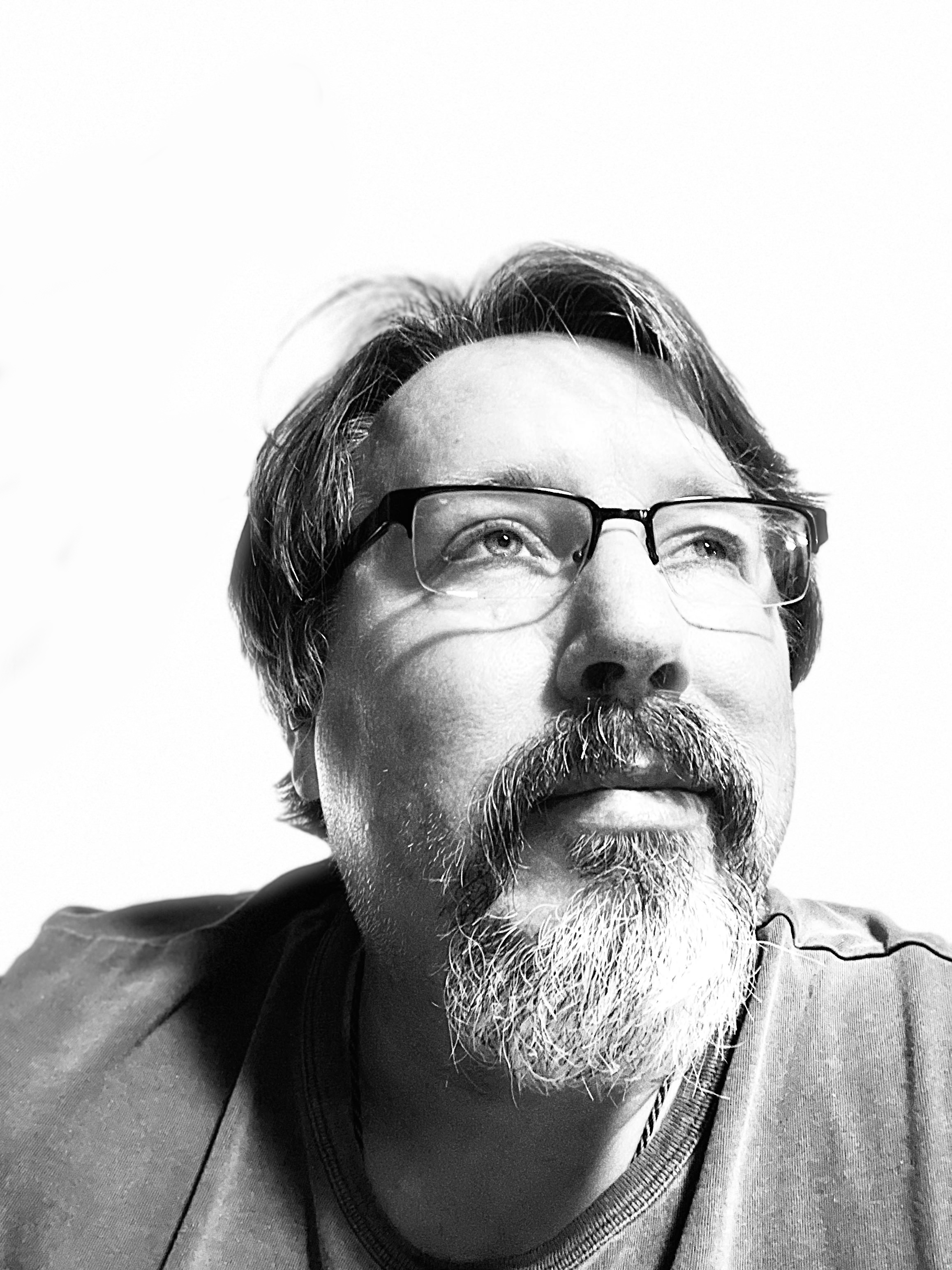
Brian Turner has five collections of poetry, from Here, Bullet to The Dead Peasant’s Handbook (Alice James Books), and a memoir—My Life as a Foreign Country (W.W. Norton & Co.). He’s the editor of The Kiss and co-edited The Strangest of Theatres. His poems and essays have been published in The New York Times, The Guardian, National Geographic, and Harper’s, among other fine journals, and he was featured in the documentary Operation Homecoming: Writing the Wartime Experience, nominated for an Academy Award. He lives in Florida with his dog, Dene, the world’s sweetest golden retriever.
Kárpáti László eredeti végzettsége szerint angoltanár. Öt éven keresztül tanított, majd 2018-ban egy huszárvágással átkerült a gyermekvédelembe. A doktori képzése alatt megfertőzte az írás szeretete, így ekkortól kezdve igyekezett folyamatosan alkotni. A korábbi írásaihoz képest éles váltás volt, amikor nagyjából három éve elkezdett újból verseket, majd életében először, novellákat írni. Első sikeresen megjelenő novellája, a Háborús veszteség is, amely a Szó-Kincs 2024-es antológiában láthatott napvilágot.
 Kaleidoszkóp